
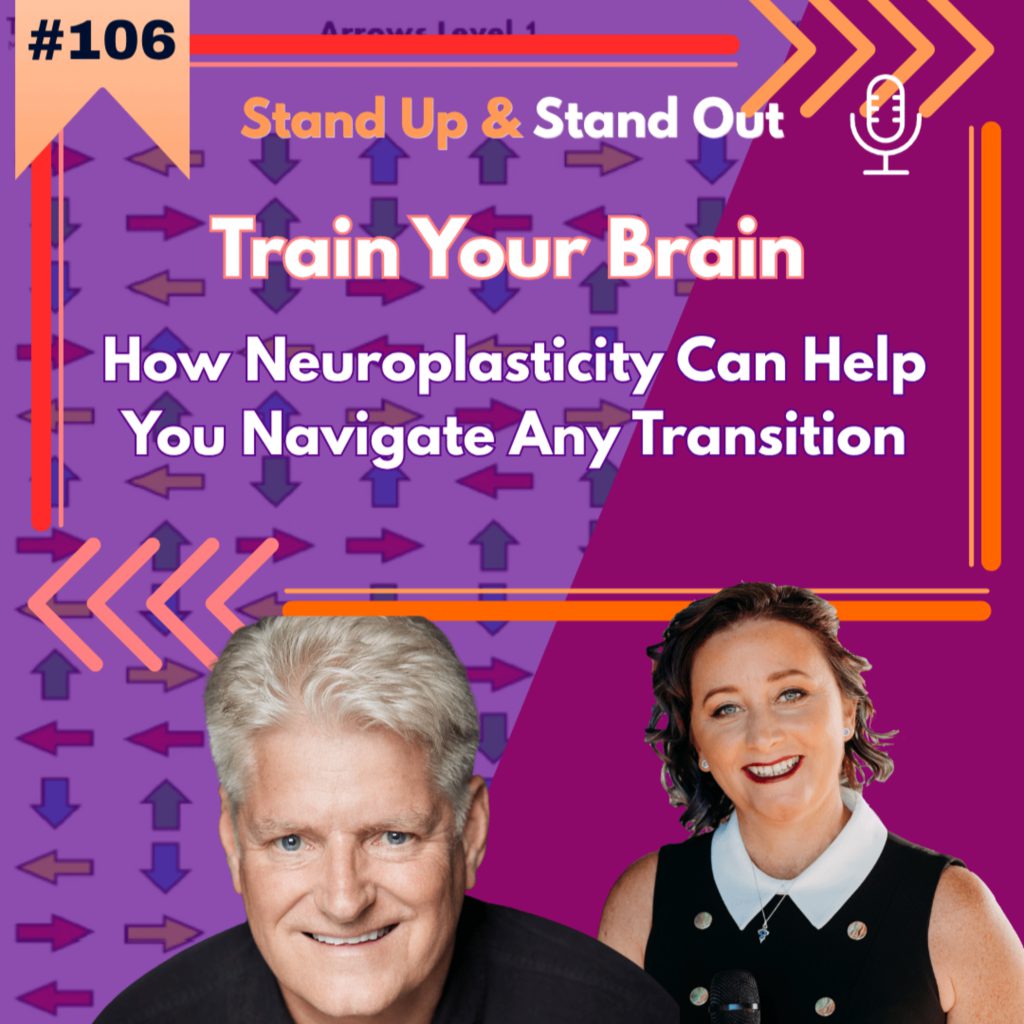
What if the mistakes you’re trying so hard to avoid are exactly what your brain needs to change? Neuroplastician John Kennedy built the first targeted neuroplasticity training program for the Marine Corps, and he’s spent nearly 20 years helping Navy SEALs, Olympic athletes, and kids with autism rewire their brains. In this conversation, we get into why the struggle matters more than accuracy, how flow state actually works, and how anyone facing a career change or life transition can train their brain to adapt faster.
→ Why “it’s not the accuracy, it’s the struggle” is how your brain rewires fastest→ How an Olympic skier learned to see further down the hill at 100 mph (flow state, explained)→ How to use intentional practice to get ready for a new job, an interview, or any big transition→ What digital dementia is, and why the years before age seven matter so much→ Why boredom is brain training for kids and a gift for adults→ How the brain can rewire around strokes, concussions, and other damage
——🔗 Join the free Business Foundations Collective, where we keep these conversations going: https://qrco.de/BizFunFollow her on her platforms and be part of the conversation:
Personal Site: https://www.thenikkigreen360.com
🌐https://www.thenikkigreen.com
Instagram: https://www.instagram.com/_TheNikkiGreenTikTok: https://www.tiktok.com/@thenikkigreenLinkedIn: https://www.linkedin.com/in/TheNikkiGreenTwitter: https://www.twitter.com/_TheNikkiGreen
——
🧠 Connect with John KennedyWebsite + free Zoom consult: https://combatbraintraining.comLinkedIn: https://www.linkedin.com/in/kennedycg/
(When you reach out, tell John that Nikki sent you.)
CHAPTERS
00:00 – Welcome: John Kennedy is here to train your brain
01:06 – From Chicago consultant to Marine Corps brain trainer02:33 – Helping everyone from Navy SEALs to kids with autism
02:56 – The colored arrows exercise: why “simple” is hard work for your brain
04:34 – How your brain rewires itself, even around damage
05:23 – Five concussions: can the brain recover like any other injury?
06:03 – “It’s not the accuracy, it’s the struggle”: why mistakes change you fastest
07:25 – ⭐ Same eyes, same snow: the Olympic skier and flow state
08:11 – How to use neuroplasticity when life forces a transition
09:23 – Intentional practice: how to rehearse your next job or interview
10:40 – “The grass is blue and the sky is green”: adjusting to a new job
11:19 – Why ages 0–7 matter most for your child’s brain
12:24 – Digital dementia: what early phone use does to kids
13:34 – Why phones go away at our volleyball tournaments
14:36 – What happens when schools take phones away
16:25 – Why boredom is important for kids
17:11 – Why boredom is a gift for adults too
18:04 – The one-toy study: less stimulation, more imagination
19:18 – How to connect with John Kennedy
FAQ
Q: What is neuroplasticity?
A: Neuroplasticity is the brain’s ability to rewire itself by forming new connections, at any age. Whatever you repeat in thought, speech, or action, the brain gets faster and more efficient at. That includes rewiring around damage from strokes or concussions.
Q: Can you rewire your brain as an adult?
A: Yes. John Kennedy sees processing speed improve 10–20% in under an hour with his training exercises, because the brain starts rewiring during the exercise itself.
Q: What is digital dementia?
A: Researchers in South Korea found that children who used phones heavily from a very young age were showing dementia-like symptoms by their early twenties. They missed the window before about age seven, when the brain builds its foundational connections.
Q: How does neuroplasticity help with a career transition?
A: A new job or situation asks your brain to recognize a new pattern. Intentional practice speeds that up: anticipate the interview questions, picture the new role, and walk through what will be different.
